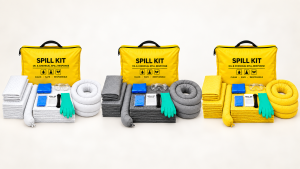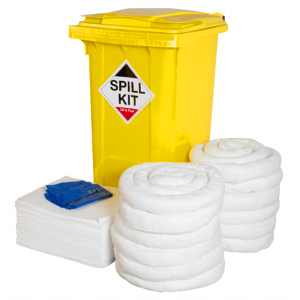
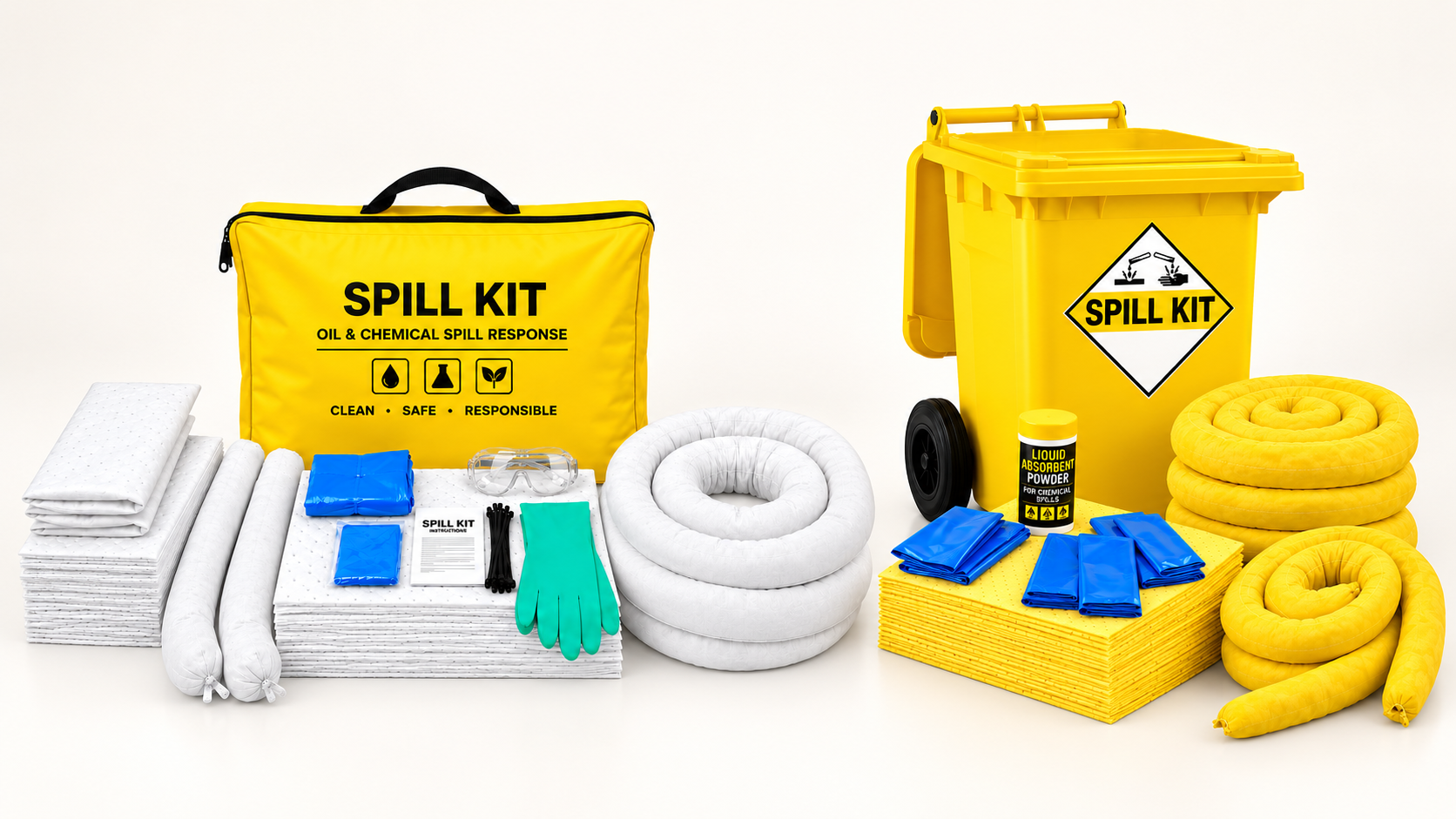
A capacity printed on a spill kit listing can help narrow options, but it is only one part of a buying decision. Start by documenting the credible spill scenarios at your site. Then compare the contents list, the absorbent’s suitability for the liquid and the kit’s location.
Treat nominal capacity as a planning label
A “20 L” or “50 L” description should not automatically be read as a promise that every supplied item will absorb that exact amount of every liquid. Fluid type, absorbent type and how the items are used affect performance. Ask the supplier what the capacity means and whether there is supporting test information if your purchase specification requires a measured figure.
Choose a format people can reach
A portable mat bag may suit a smaller, fixed work area where space is limited. A plastic can or wheeled bin can make sense when a larger collection of supplies needs to be stored together and moved along an unobstructed route. Check doorways, storage height, floor conditions and who will move the kit. The right location should follow the site’s emergency plan, not simply the most convenient shelf.
Review the quotation line by line
Compare the count and size of pads, socks and pillows; protective items; disposal bags; instructions; container type; and replenishment options. Ask for the final packing list in writing. If two quotations both say “30 L,” they may still contain different items.
Kalhar Enterprise can quote several spill-kit formats. Share your required liquid type, intended location, kit format and item list so the supplied configuration can be checked against the order.